Ruvexariqer
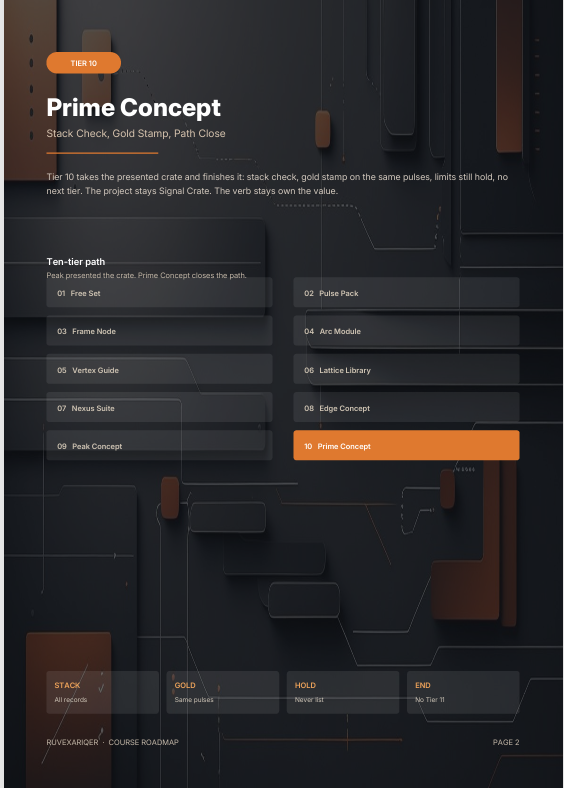
Prime Concept
Prime Concept
Couldn't load pickup availability
- 💾 Digital file available after purchase
- 📚 Long-term availability
- 🔒 Secure checkout
- 🗓️ Content updated in 2026
Self-paced learning overview
Problem Statement
Learners may understand individual Rust concepts but still find it difficult to combine them inside one larger project. Ownership decisions can affect data models, error handling can influence function structure, concurrency can change how information moves, and testing needs to fit into the wider organization of the codebase.
When these areas are considered separately, a project can become harder to read and maintain. The challenge is learning how to connect several technical ideas while keeping responsibilities, data flow, and program structure clear.
Solution
Prime Concept approaches Rust development as a connected design process.
Learners begin with project planning and data modeling before examining how ownership, borrowing, traits, and error handling influence implementation choices. Later sections connect concurrent components, testing strategies, documentation, and code review with the wider architecture.
The material emphasizes reasoning about relationships between components rather than treating each topic as an isolated technique.
What’s Inside
Prime Concept includes structured lessons, diagrams, examples, and exercises covering:
- Project planning
- Data modeling
- Module responsibilities
- Ownership decisions
- Borrowing relationships
- Error-handling structure
- Traits and generic components
- Concurrent task organization
- Communication between components
- Testing strategy
- Code review
- Documentation structure
- Refactoring
- Performance reasoning
- Project-wide organization
- Earlier subjects from the full Ruvexariqer sequence are revisited and connected within broader programming examples.
Who Is This For?
Prime Concept is intended for learners who already understand the main Rust topics covered throughout the previous Ruvexariqer tiers.
It is suitable for learners who want to study how ownership, data modeling, abstractions, concurrency, testing, and architecture can work together within a larger structured project.
What You’ll Learn
- Plan the structure of a broader Rust project
- Divide responsibilities between modules
- Design data models around program requirements
- Make clearer ownership and borrowing decisions
- Organize error handling across multiple components
- Connect traits and generics with larger code structures
- Coordinate concurrent components
- Structure communication between tasks
- Develop a testing strategy for different program areas
- Review code organization and module boundaries
- Document technical decisions clearly
- Identify repeated or overloaded structures
- Refactor code into more focused sections
- Reason about performance-related design choices
- Connect foundational and broader Rust concepts within one project
- Review how individual decisions influence overall architecture
Refund Policy
A refund request may be submitted within 30 days of purchase, subject to the conditions described in the Ruvexariqer Refund Policy.
This section explains the available refund request period and does not make claims regarding individual learning outcomes.
Certification
The course includes a certificate of completion, giving learners a clear way to record completion of the included Prime Concept materials and the final stage of the Ruvexariqer learning path
Share
Is a certificate included?
Is a certificate included?
Yes. Each course includes a certificate of completion that gives learners a clear record of completing the included learning material.
Do I need previous Rust knowledge?
Do I need previous Rust knowledge?
Course requirements vary by tier. Earlier tiers introduce foundational ideas, while later tiers move toward broader programming concepts and more detailed practice.
What format are the courses provided in?
What format are the courses provided in?
Ruvexariqer courses are organized into written lessons, structured modules, practical explanations, and supporting learning materials designed for independent study.